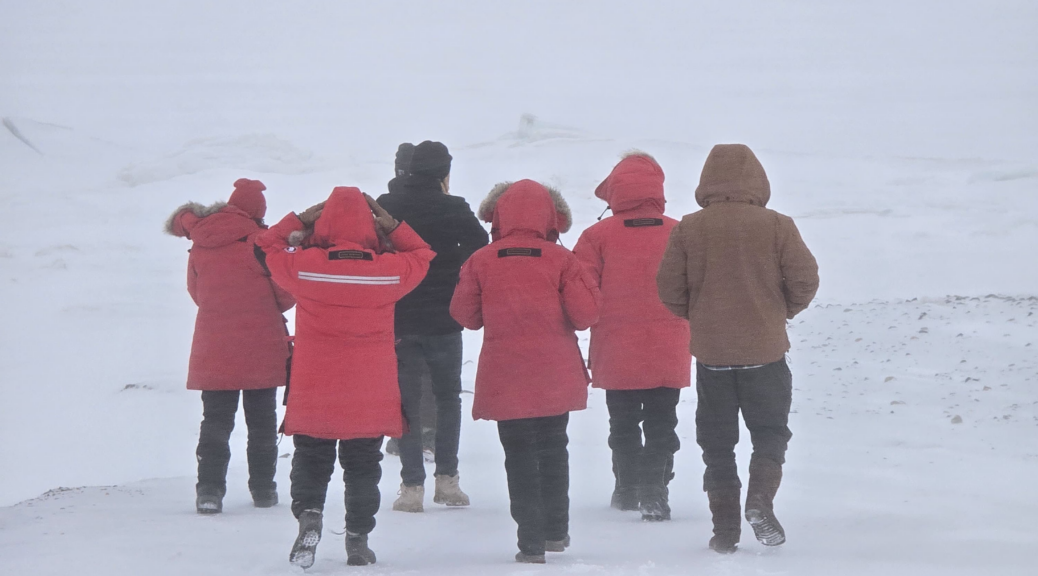
A question I get a lot is “What do you do on days you’re not diving?”. This is a completely reasonable question – we spend eight weeks here, but hope to get between ten and fifteen dives. We’ve already covered what happens in the first week – a lot of unpacking, inventorying, and setup – and can reasonably assume that the last week is the reverse of that – packing, inventorying, and shipping. That leaves four weeks of days unaccounted for – what do we do with all that time?
Water sampling, CTD casts, and sample processing
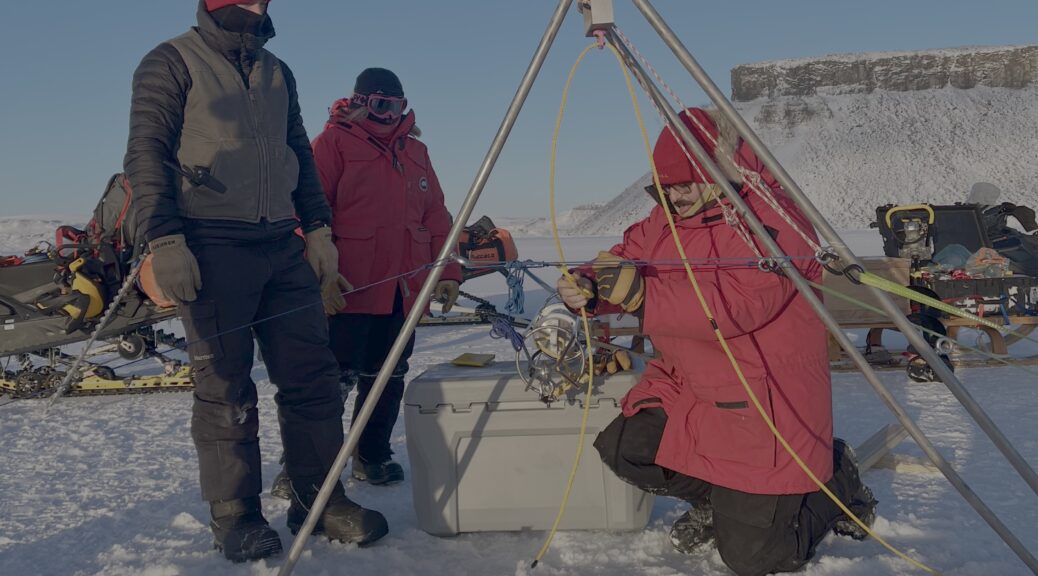
While maybe unfair to lump these all together, often non-dive days provide an excellent opportunity to do science with a lower logistical load. Water sampling and CTD casts can be done by a smaller team and require less setup and time than Icefin, and can be collected from different sites than the Icefin dive sites.
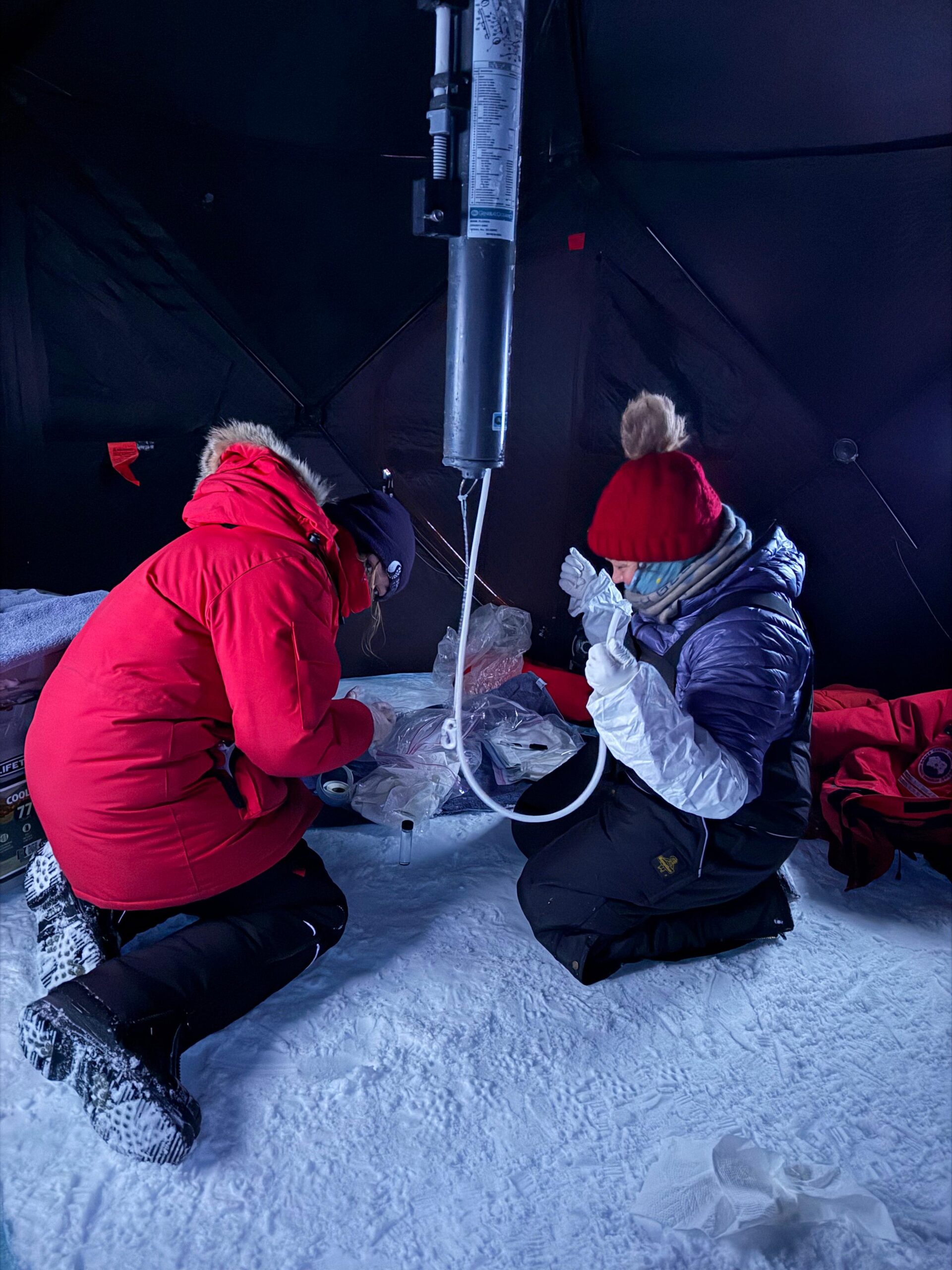
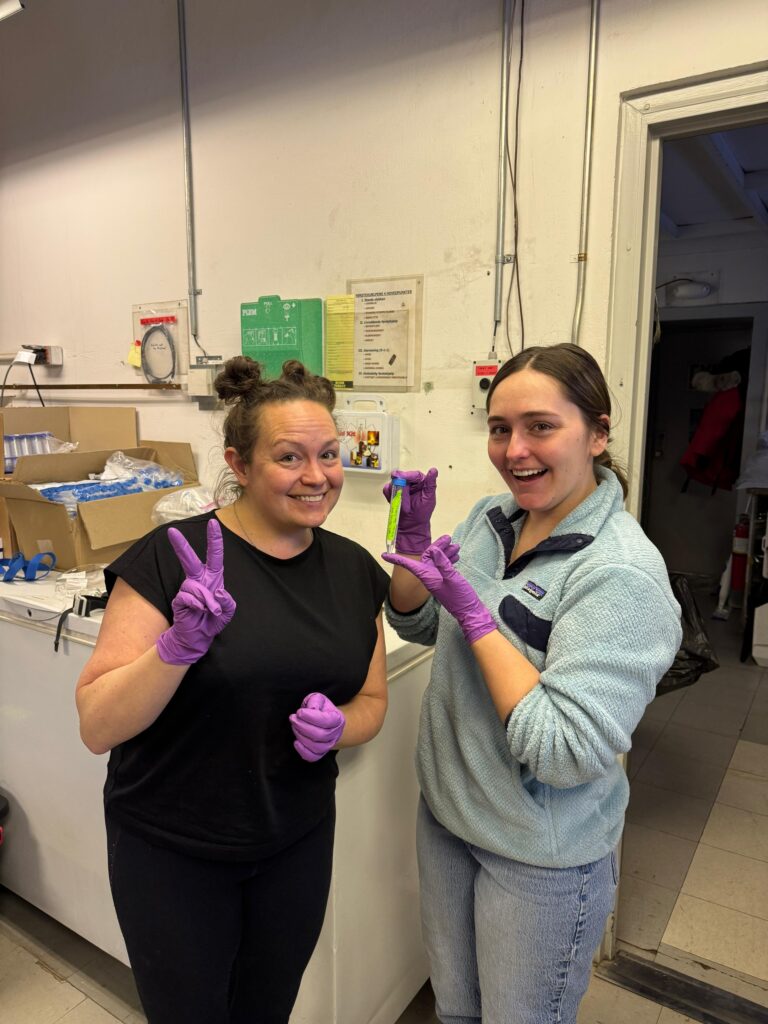
After the samples are collected, the samples for microbial and metal analysis need to be processed before they return to the US, so non-dive days can also be used to do this processing.
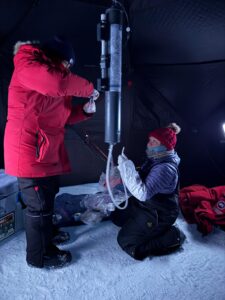
Veronica Hegelein (left) and Dr. Brandi Revels (right) extracting sampled water from the Niskin water sampler.
Dr. Brandi Revels (left) and Veronica Hegelein proudly displaying the first processed sample of the season
A Niskin water sampler emerging from the borehole as deployed over Icefin's A-frame
Moving sites
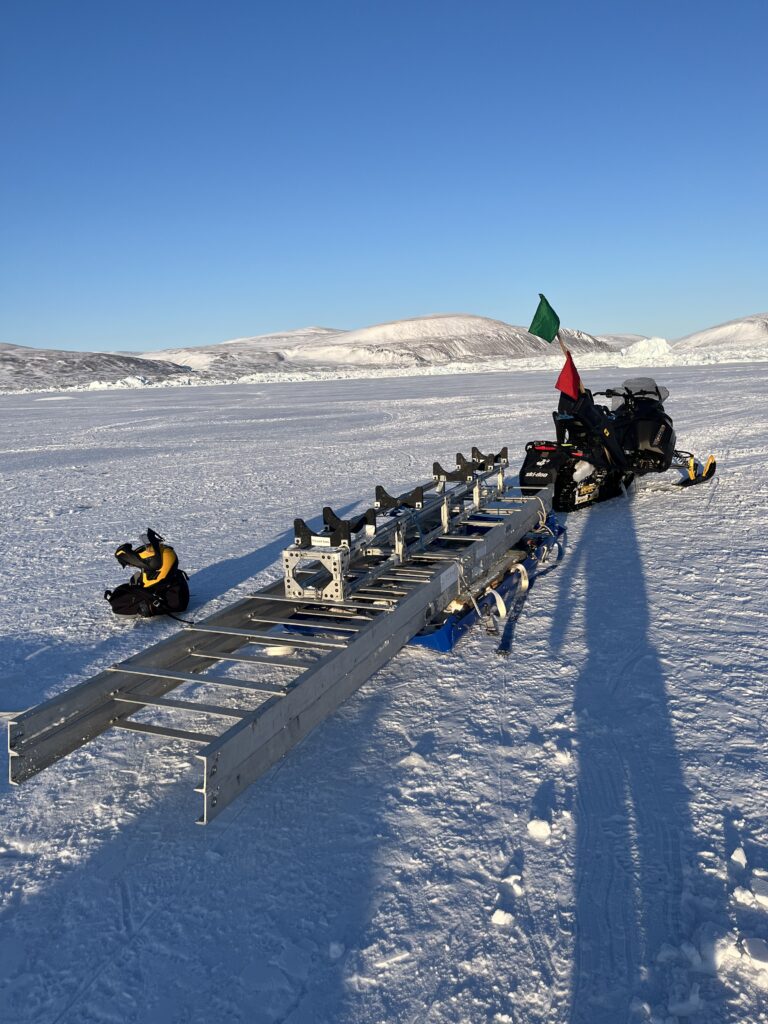
Icefin's Launch and Recovery System (LARS) broken down and packed on a sled to tow to the next site.
To go from one site to another, we need to break down the deployment A-frame (Launch And Recovery System, or LARS), drag all our gear to the new site, and set it all back up again. While it is possible to break down the entire camp after a dive, non-dive days are a much less stressful time to complete this work.
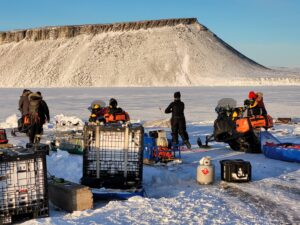
The team preparing the various equipment, including two fiber optic winches, to go from base to a field site.
Fixing broken things
Things break. We fix them.
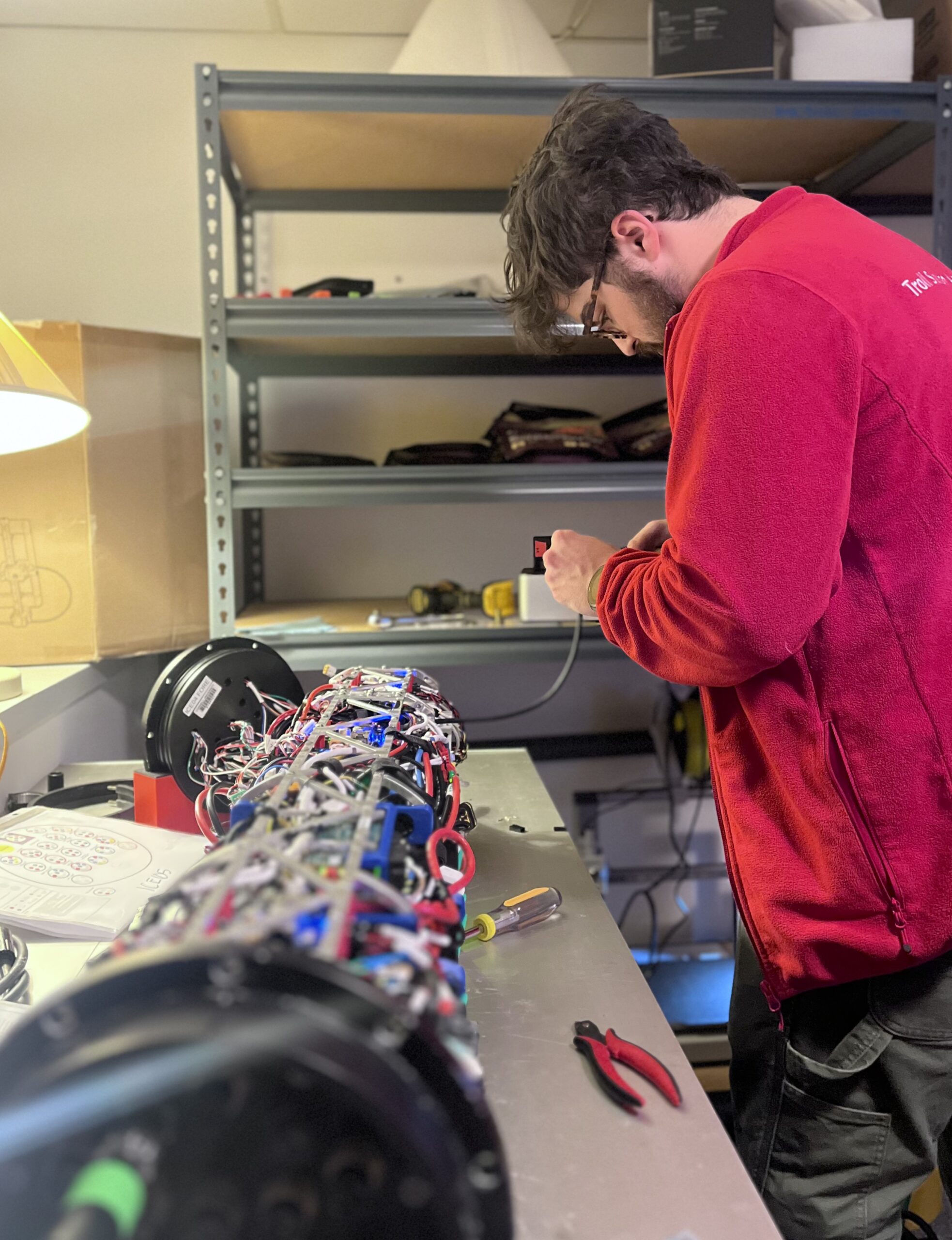
Sometimes this is something in Icefin itself – a bracket needs to be replaced, or the electronics need to come out of their pressure vessel and be troubleshot. This often takes at least a day – after “unbottling” the pressure vessel, identifying the issue (if there is only one), and fixing it, we then must re-run all our functional tests, a vacuum test post re-bottling to make sure the pressure vessel won’t leak underwater.
Sometimes this is a repair to field equipment, like patching a hole in a tent or a sled, or fixing a generator. The team comprises a broad skillset, so there’s almost always someone who can tackle a problem and do a repair.
Daniel Lein, adding a new cable to Icefin's electronics to enable a new instrument.
Investigating data and planning dives
The first thing the scientists do after coming back from a CTD cast is race to get the data from the instrument to their computer to see what the instrument saw. This first look, however, needs further processing and interpretation; scripts need to be run and plots need to be plotted. These interpretations are not only just fun for the science nerds, but also critical to inform future dives, both their locations and operations.
On non-dive days, the science leads can take their time to go through the data and meet to plan the next dive. Then, the whole group gets together to discuss the dive plan so everyone knows what to expect from the next day out, both the vehicle operation and individual jobs.
Rest
Polar fieldwork is physically exhausting – we are constantly burning energy just to stay warm while also lifting and moving heavy equipment (Icefin itself, water samplers full of water, Pelican boxes full of tools and gear), and doing all that for an extremely long day. Rest days are exceedingly important to maintain physical and mental health over eight weeks of work, so days directly following a dive start later, and every week includes at least a half day fully off-the-clock.
In addition to sleeping, resting (without too much access to internet) comprises reading (and talking about) books, watching movies that play on the base’s TV stations, playing board games with each other, or battling the cold with some heat from the sauna.
Veronica Hegelein has proven to be the team member who is most likely to fall asleep at a given moment, demonstrates her skill here for finding rest in any second of downtime
We’re here in Greenland for eight weeks to gather incredibly valuable data; which, unsurprisingly, takes some hard work. We hope that in this time we can execute at least twelve dives with Icefin at various sites around Wolstenholme Fjord. These days are cold and grueling from both the physical exertion and constant focus required from the (abbreviated) dawn to well past dusk. Let’s walk through our schedule for a typical dive day.
0830 - Loading trucks and sleds
Dive days start relatively early – loading trucks with the equipment that stays in the dorm (Icefin itself, computers, personal bags, etc.) at 0800 means we’ve gotten up, eaten breakfast, prepared lunch, packed all our daily gear, and stepped into our ECW (extreme cold weather) clothing before then.
Trucks, laden with equipment, drive down to “the transition” – that is, the literal transition between land and sea ice. We keep our sleds and some cold-hardy equipment there, and load all the extra equipment into sleds, then strap it all down for the bumpy ride over ice tied to the back of a snowmachine.
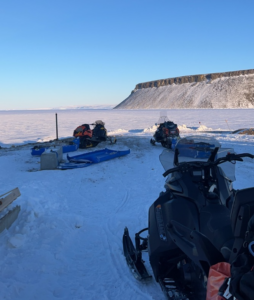
Snowmachines at the sea ice transition, with sleds being loaded and connected.
0930 - Check out and commute
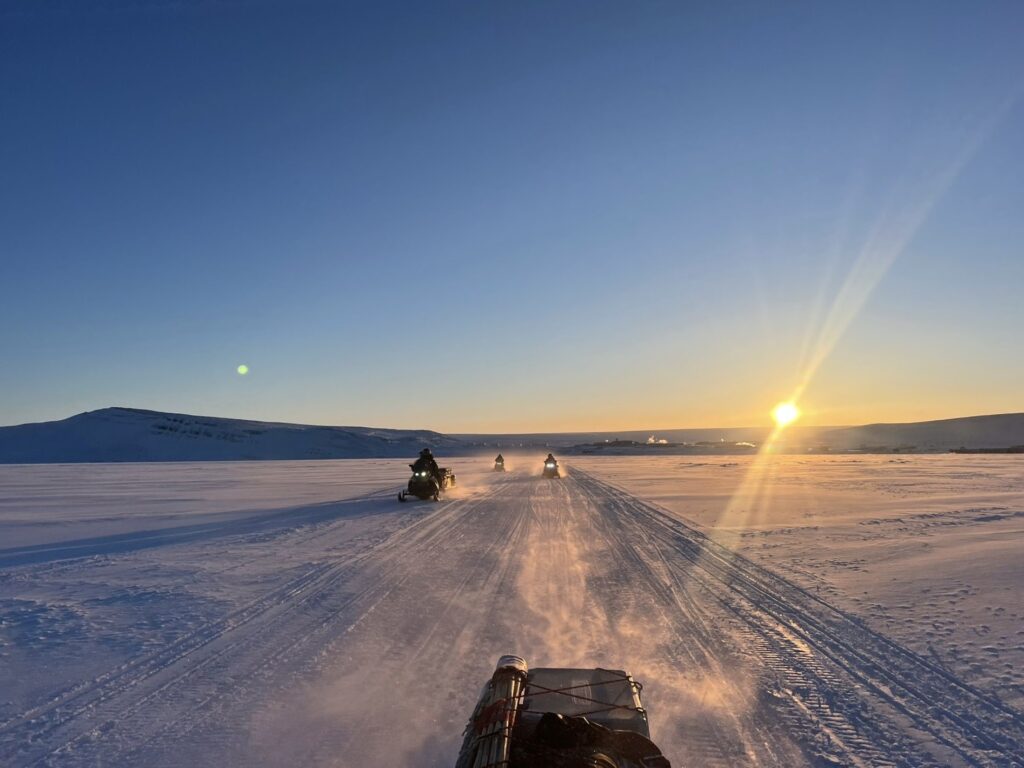
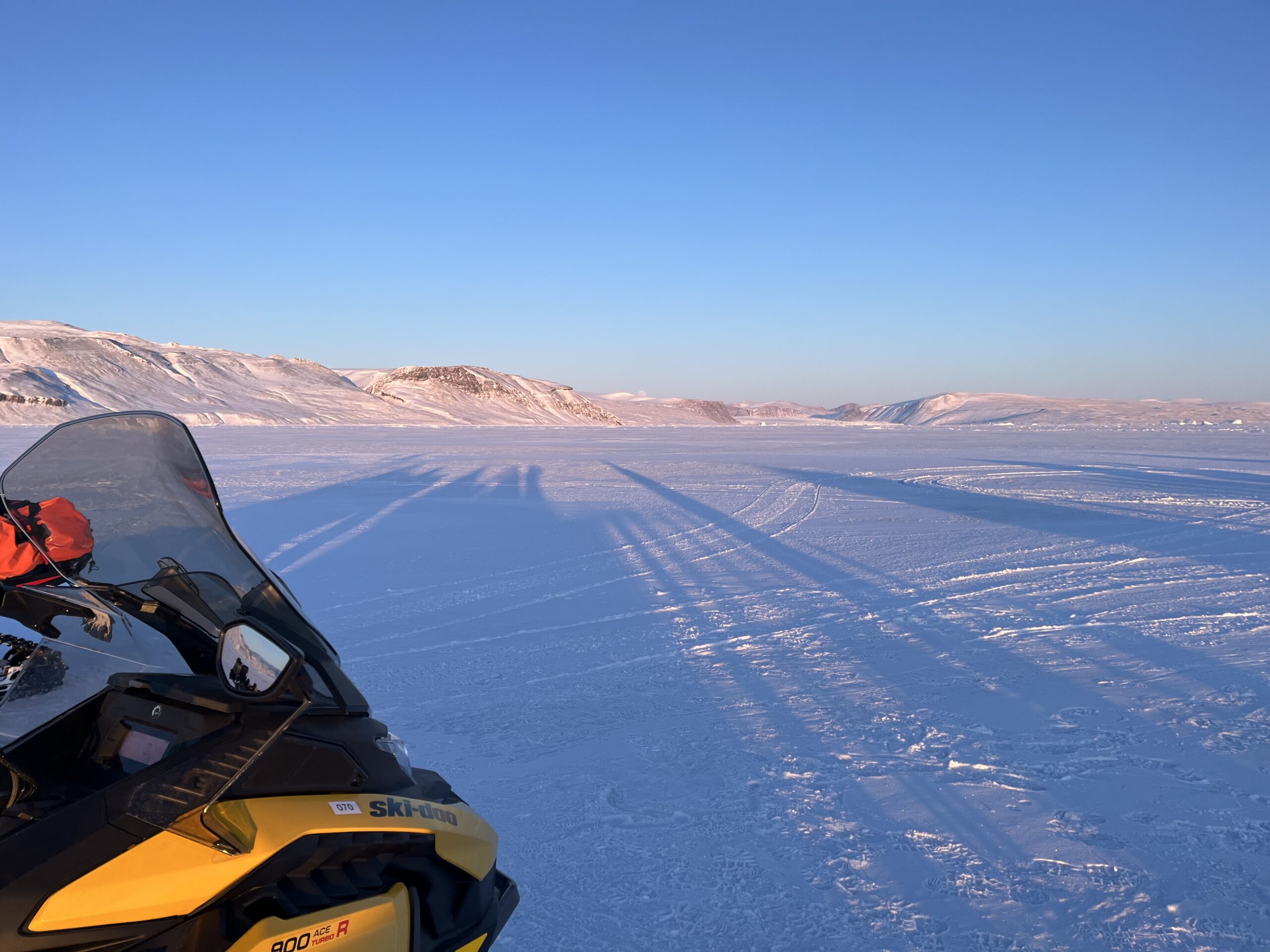
Snowmachines, fully loaded with equipment and people, drive across the sea ice in the sunrise to get to the dive site.
The first step to leaving base is to let people know that we’re leaving, and when we plan to be back. Safety first – this emergency contact is waiting for us to check back in safely when we get back, and has a procedure to follow for emergency rescue should we fail to call back in on time.
Then we set off on our snow machines for the world’s best commute. The next hour we drive over the sea ice, following our tracks and previously placed flags, taking in the wonder and surprising colors of the landscape.
1030 - Arrive at site
This timing changes depending on the site, sea ice conditions, and load on the snowmobiles, but is typically a pretty long commute – upwards of an hour. The traffic conditions are optimal, but the fifteen miles is driven carefully, not quickly.
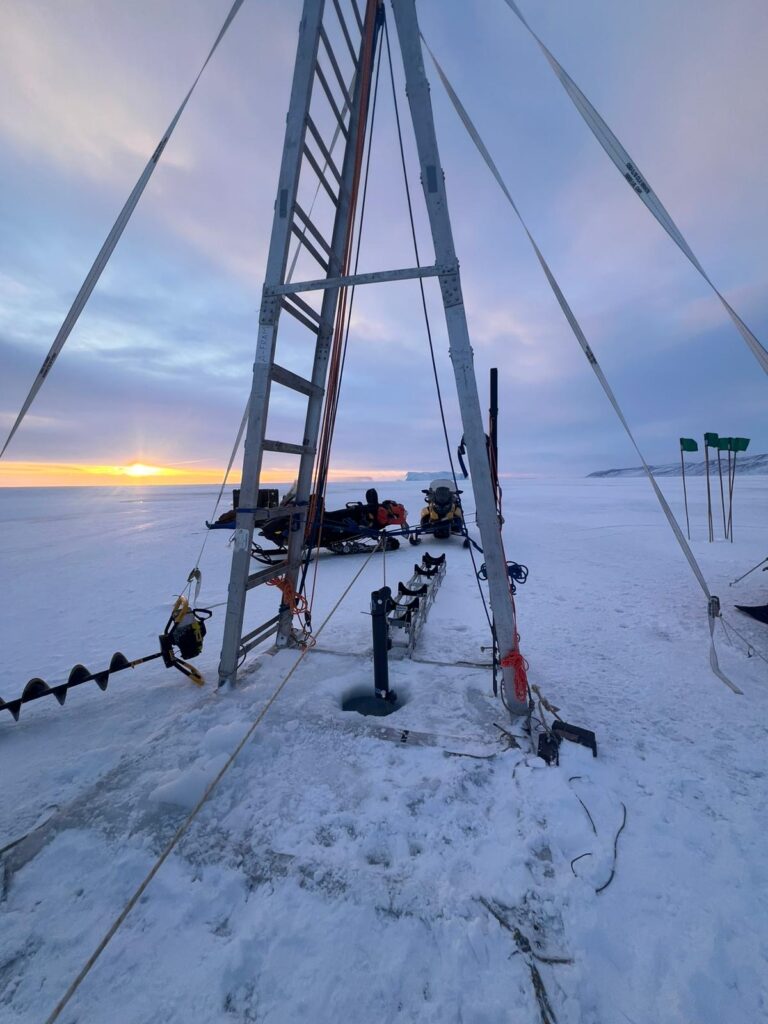
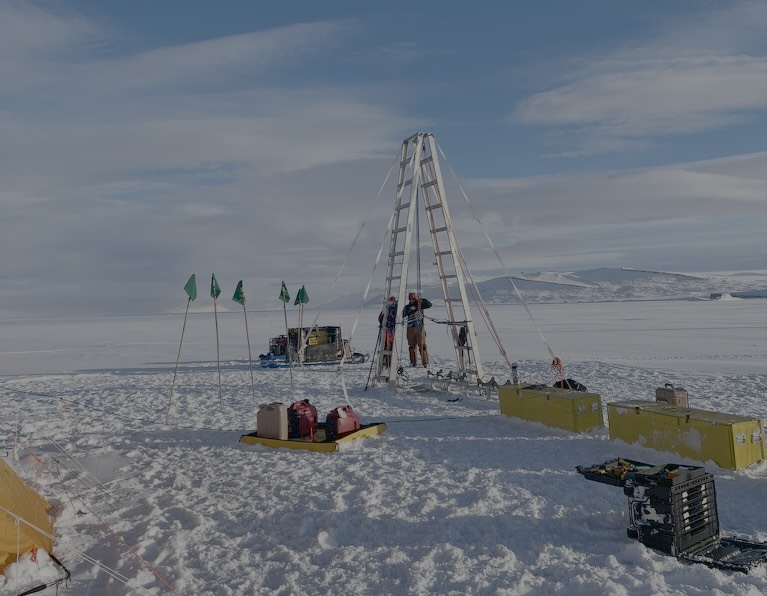
Immediately everyone jumps to work setting up tents, generators, and Icefin. Structurally sound components (like the A-frame on which Icefin is lifted and deployed) are set up ahead of time, but Icefin’s topside controls take place inside a tent that is set up and struck each dive, so site set up is a significant undertaking.
The field site in preparation - the Launch and Recovery System (LARS, or A-frame) is already set up, and the yellow boxes that contain Icefin's modules are taken off sleds.
1230 - Icefin Functional Test
Before sending Icefin into the sea, we need to check that all the sensors are performing as expected – the drive out on sleds over ice is not exactly what one would call “smooth”, so we need to ensure no connections have been broken that would preclude a dive.
Fieldwork is best lived through checklists – when you’re cold, hungry, and tired there is every chance of forgetting a critical step. We go through checklists for both the deployment setup as well as setting up the controls and command of the vehicle and testing every instrument.
1240 - Pre-dive Meeting
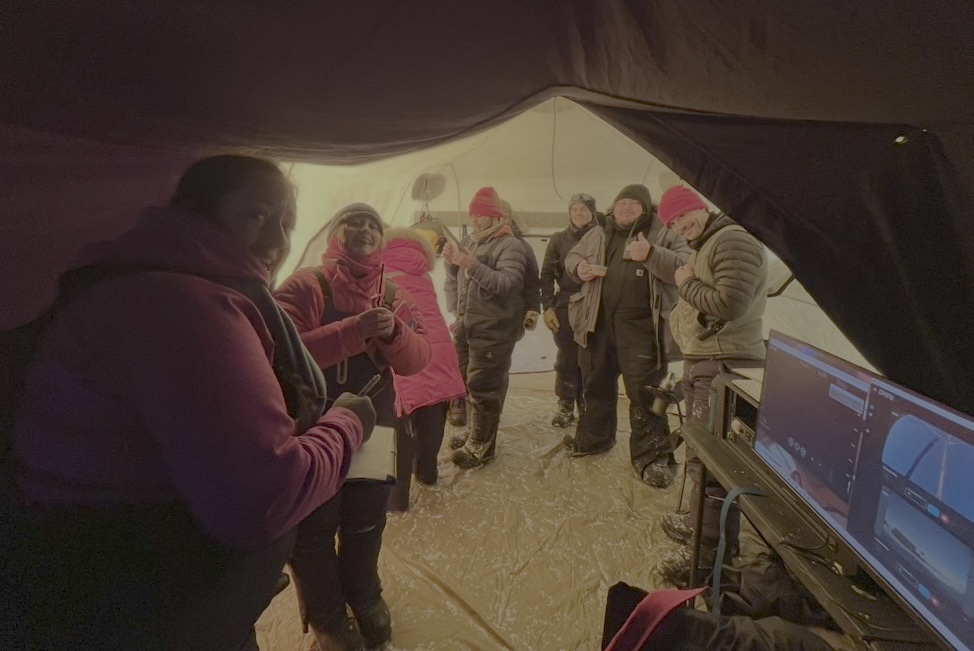
A brief break in the action occurs while everyone gathers inside the tent to review the plans for the dive, discuss roles, potential hazards, and operational notes. Everyone fills out a “dive card”, which records the location, time, dive log name, science priorities, and mission plan.
The team gathering in the tent for a quick meeting to re-establish mission goals and roles.
1250 - "Launch"
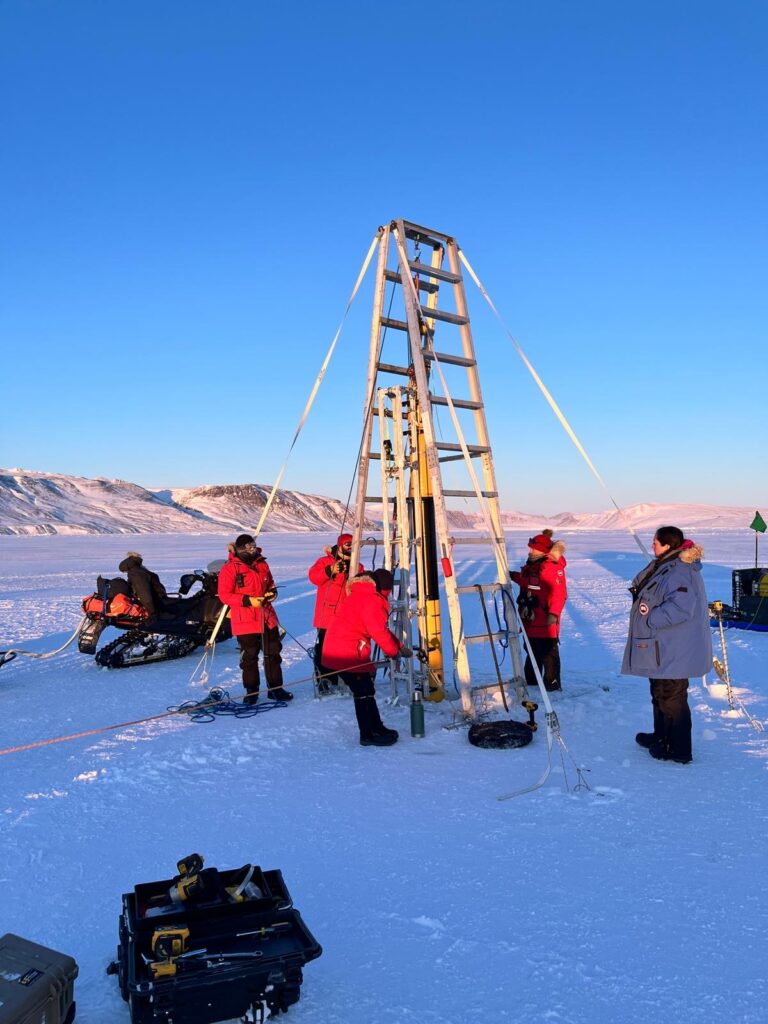
The team gathers around the Launch and Recovery System (LARS) with Icefin lifted to be vertically over the hole. Henry and Veronica are operating the lifting ropes.
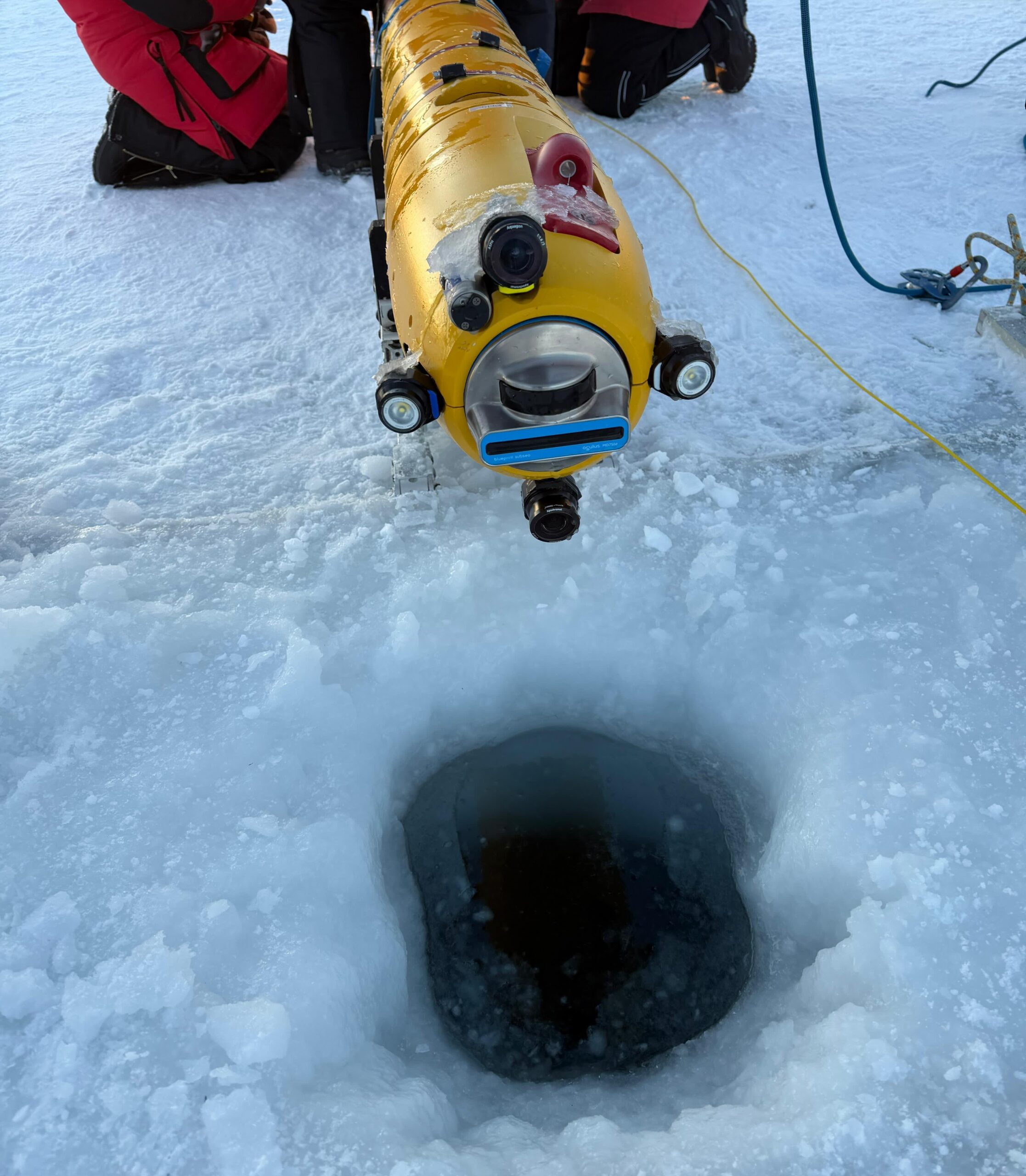
All hands are needed on deck for the next operation – nearly everyone emerges from the tent to assist in lifting Icefin on the Launch and Recovery System (LARS) and send it down the borehole. Icefin is lifted using a system of ropes and pulleys, then its weight is transferred to its kevlar-reinforced fiber optic tether for deployment down the hole.
1300 - CTD cast
Every dive begins with Icefin lowered vertically to the seafloor, treating it as an extremely overpowered CTD instrument (conductivity, temperature, depth/pressure). This cast provides the first look – for the vehicle – at the entire water column’s properties, as these signals can be used to calculate salinity and density. Other sensors, of course, are also running and providing even more information throughout the entire water column, such as dissolved oxygen and turbidity. All of this can be used to identify tracers of specific water masses; for example, identifying the depth at which the plume of subglacial outflow is pouring out into the fjord.
1330 - Dive "begins"
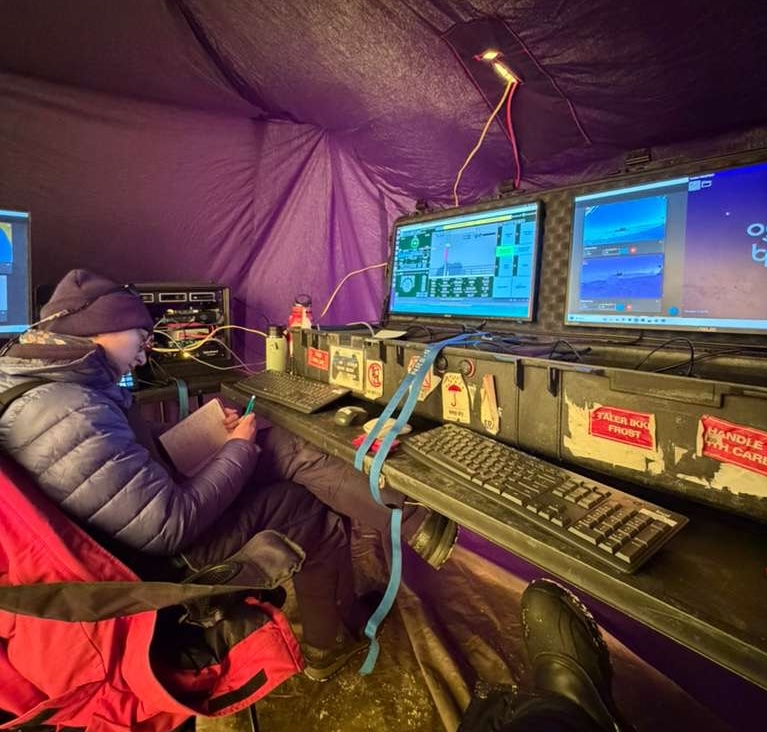
Dr. Frances Bryson taking notes in front of the topside during the dive - the screen on the left shows vehicle controls, the right shows video and sonar.
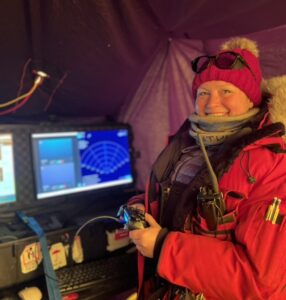
Dr. Brandi Revels excited to drive Icefin for the first time!
Following the CTD cast, Icefin is pulled back up to its starting depth, and the weights hanging from its front are released – using a method called “burnwires”. Icefin asserts itself horizontally, and we’re ready to start the dive for real.
Dives vary in their goals and operations, so it’s hard to generalize what this looks like, beyond a pilot driving Icefin; a co-pilot managing instrument controls and notes; a science officer managing sonar ranges, more notes, and oceanographic signals; and a hardworking outside team driving the fiber optic tether winch.
Sometimes Icefin is navigating up and down 50m of the water column as it drives out; sometimes it’s driving flat to gather bathymetry in the sonar; sometimes we’re precision-driving it into subglacial channels or around icebergs. The only constant is the exhausting state of total focus from everyone involved in their individual tasks, and the near-constant radio communication between different teams (both inside and outside the tent) checking on vehicle and tether statuses.
1800 - Vehicle recovery
Most days the vehicle has done the hard work in driving away from the hole, so we give it a break and let the winch pull it back. If all is well, the vehicle comes straight back to the hole with minimal inference between the tether and icebergs.
As Icefin’s being pulled in, the hard work of the dive is mostly behind us, so we start to pack down the site until all hands are needed again to lift it out of the hole and back onto land. Critical data is moved from computers to hard drives, and then everything is taken apart just as it was put together at the beginning of the day.
In the early season this happens a lot earlier in the day (sunset progresses from around 1600 to 2000 throughout the season), so take this and the following timestamps with a grain of salt – these are all later-season timing.
Icefin is recovered often with icicles around its nose.
2030 - Departure
Site packed down, including all tents struck and stored in a bear-proof container, socks exchanged for dry ones, toe- and hand-warmers refreshed, and a caloric snack quickly downed, we start our commute back home, hopefully before it’s too dark and cold.
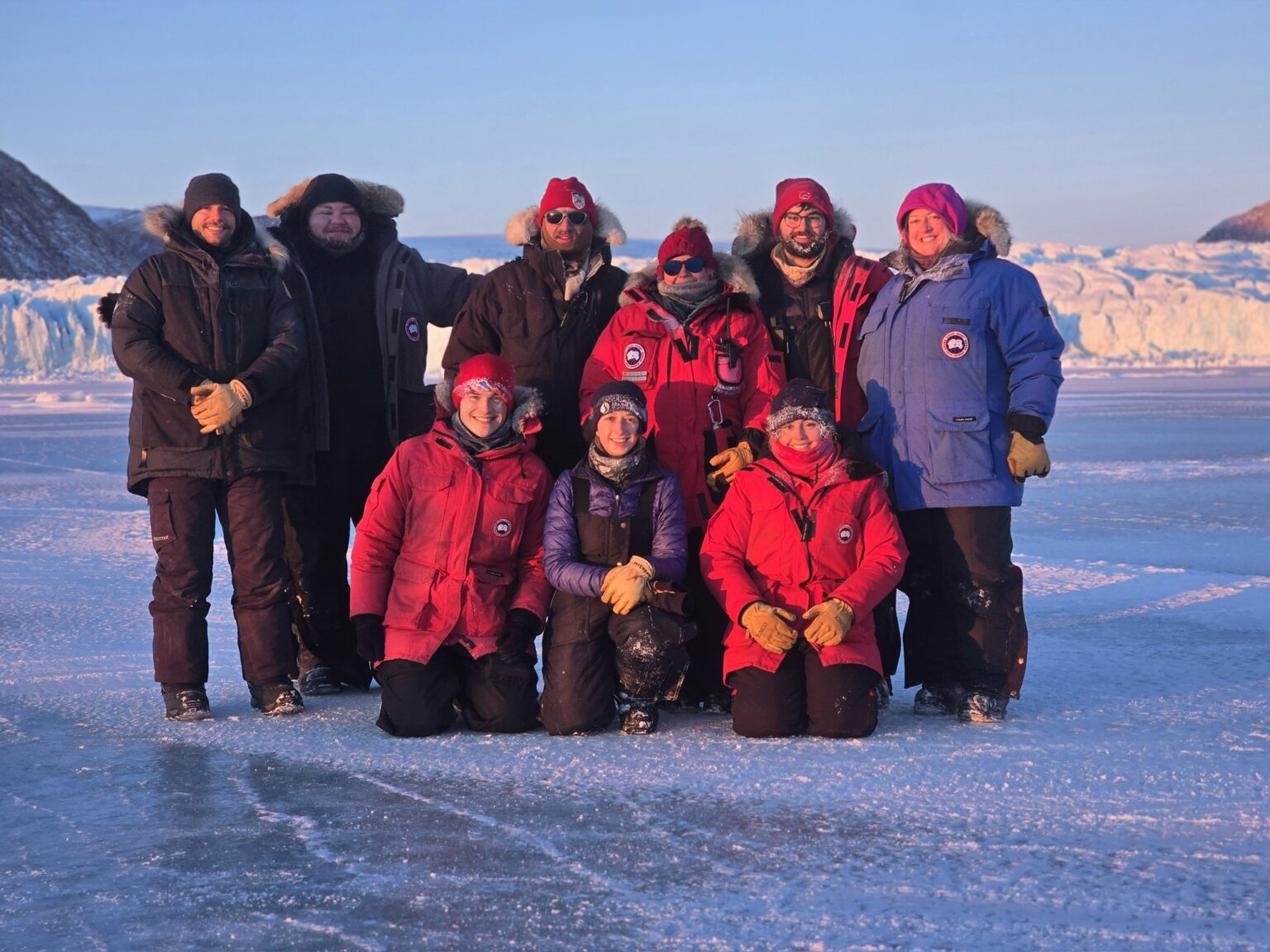
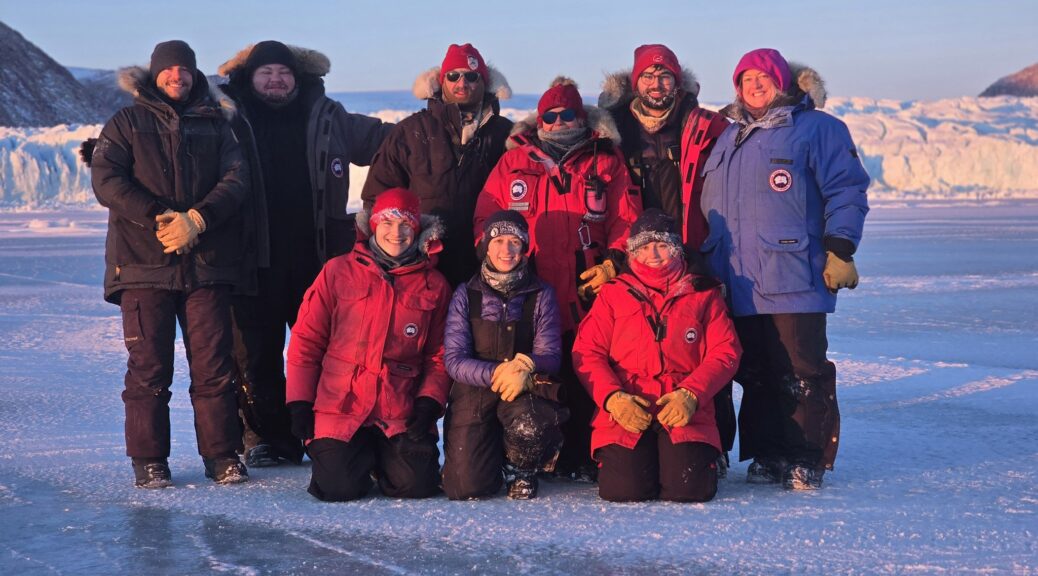
The field team (Phase 1) after a successful day of setting up site in front of Rasmussen Glacier. Top row, right to left: Dr. Peter Washam, Jorge Coppin-Massanet, Col. Paul Tanghe, Dr. Brandi Revels, Daniel Lein, Dr. Britney Schmidt. Bottom row: Henry Wolf, Dr. Frances Bryson, Veronica Hegelein.
2200 - Dinner
Finally! We’re back, have parked the snowmobiles and packed all our gear back into the dorm, so it’s time to eat some hot food (hopefully pizza) and crash. The next day will start a little later, and we’ll go through what happens on all the other days in the season in an upcoming post – dive days are only a fraction of the work and science that we do here.
This is the second year of our project supported by NASA (PI Schmidt, Co-Is Washam, Meister, Bryson, Lein & Girguis) called SSHOWUP: Sample Selection and Handling for Ocean worlds and Wolstenholme fjord Under-ice Platforms. This project is a 4-year grant to accomplish three field campaigns in Greenland. The SSHOWUP Project was developed to simulate and advance elements of a future Europa mission while studying similar environments on Earth. We are using the underwater vehicle Icefin as a platform to conduct missions under the sea ice and glaciers of Wolstenholme Fjord both as an analog for Europa and to advance our understanding of conditions and life under the ice, while learning a lot more about the glaciers on our home planet along the way.
Overall, our goals this season are to:
Map oceanographic conditions and search for freshwater plumes under the sea ice, mélange, and glaciers by conducting surveys with oceanographic sensors and investigate the dynamic response of the ice to the ocean by mapping ice structure and ocean conditions as they change.
Measure the nutrient sources, volatile gases, and microbial populations in the under-ice ecosystem.
Phil Norris, Polar Bear Guard (swapping with Paul mid March)
Justin Lawrence, Science (joining mid March)
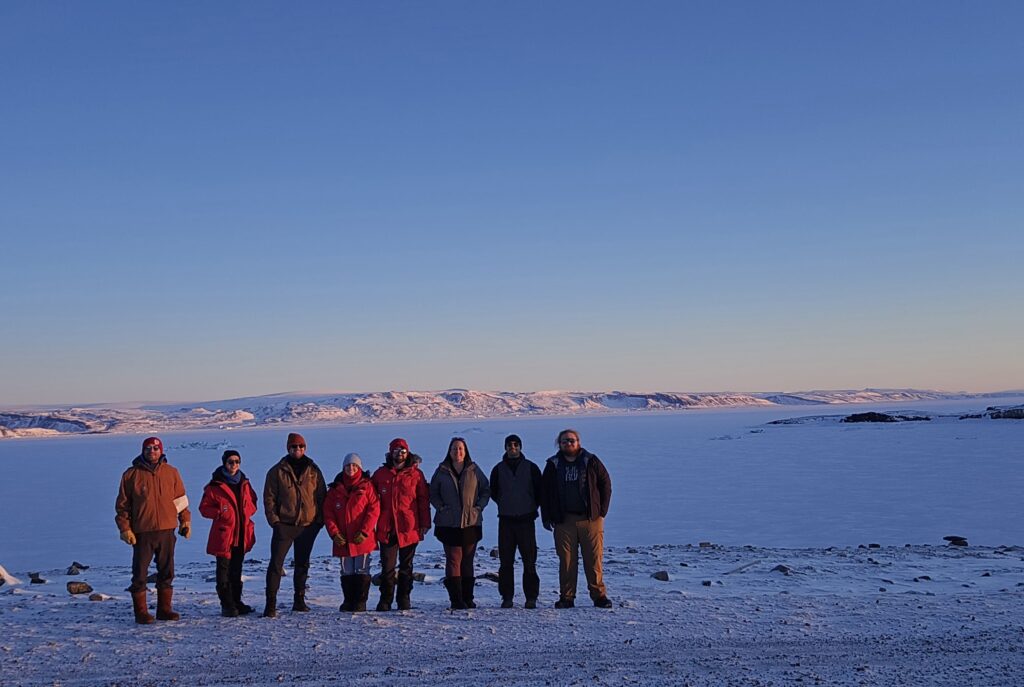
The 2025 field team in front of Wolstenholme Fjord - mostly the same people, with few substitutions. This year's team photo will be waiting for the success of our first dive.
The Science
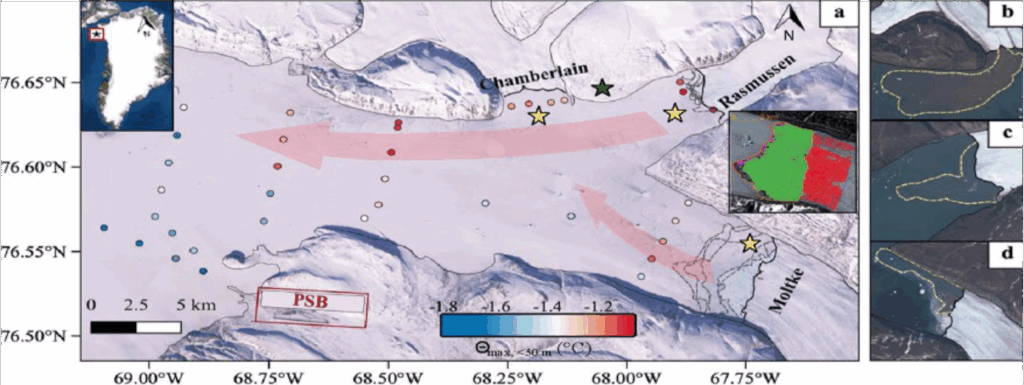
We are working from Feb 21st-April 17th, 2026 in Wolstenholme Fjord. Wolstenholme Fjord is home to three marine-terminating tidewater glaciers: Chamberlin, Moltke, and Rasmussen. Sea ice pervades the Fjord from October to June and a region of mélange (broken up bits of sea ice, bergy bits, and icebergs) exists in front of Moltke glacier which is frozen in each year as the sea ice reforms. Turbid, sediment-laden surface waters in front of the glaciers reveal the presence of subglacial meltwater discharging from subglacial rivers beneath the glaciers that are most active in the summer but also active in the wintertime. This water likely provides both heat, which when exported to the upper ocean likely increases melting of the glacier fronts, sea ice, icebergs, and mélange, and also nutrients which may sustain and fertilize subglacial and coastal ecosystems. The glaciers in the Fjord have receded significantly, with Moltke receding now at a rate over 1km per year, mirroring the expected increase in glacial melting and subsequent sea level rise globally. Hence Wolstenholme Fjord provides a natural laboratory to study the complex interactions between ice, ocean, and atmosphere during Greenland’s winter and as a proxy for glacial change in both polar regions. Furthermore, its proximity to Pituffik Space Base considerably reduces some of the complexity with campaigns in the Arctic.
A map of Wolstenholme Fjord and with the three glaciers we will be investigating.
Water Sampling
One of the project goals this year is obtaining water samples for nutrient concentrations, dissolved organic carbon, microbes, and metal isotopes. These properties are crucial for understanding the ecosystem within the fjord and how it shifts seasonally from late winter to early spring. Comparing the microbial analysis within and outside of a subglacial discharge plume will help tell us about potential ecosystems beneath the glacier. This will be paired with iron isotope fragmentations, which can also help tell us what type of metabolisms are present beneath the glacier; different metabolisms preferentially use specific isotopes. The nutrient concentrations can tell us how much energy is available for microbial communities throughout the season, and also give us an idea of how much nutrients are being delivered to the fjord from beneath the glaciers.
By mapping the nutrient sources and investigating the wintertime ecosystem after several months of darkness, the fjord additionally becomes a relevant astrobiological analog for ocean worlds.
Veronica Hegelein (left) and Dr. Brandi Revels (right) extracting sampled water from a Niskin water sampler in the field.
The Technology
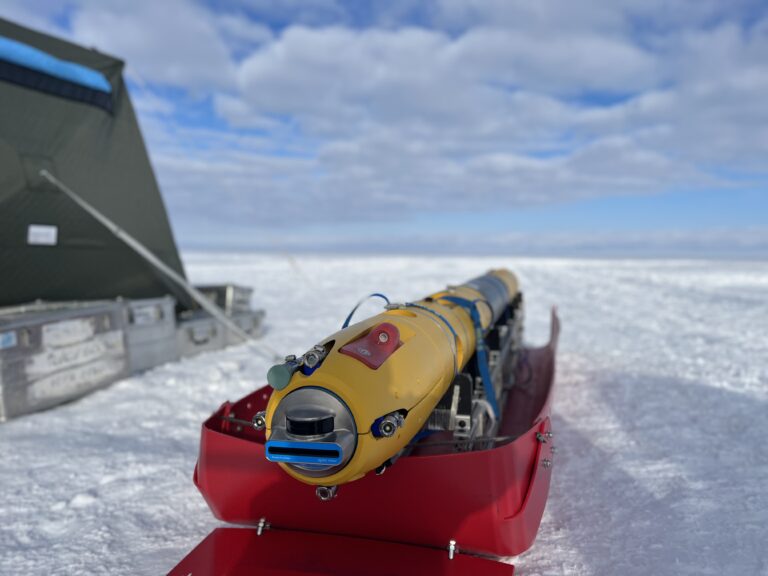
Icefin in a sled on the snow, preparing to be launched down a borehole.
A major goal of the SSHOW UP project is technology development to enable a future landed Europan mission. In this project, we simulate a future landed mission within the ice simulated by a through- ice base station that acts as a communication pathway for a mobile platform (Icefin) and enables both mobile and stationary sampling and monitoring measurements. This is the goal for the three-year project, but this season we’re putting a greater focus this year on instrument development, data processes, and improving vehicle autonomy.
Critical for planetary missions, in which communication is both delayed and minimal, is the ability for vehicles to autonomously make decisions based on their onboard sensors. To that end, we are developing sensor-based decision-making protocols to optimize science return, such as applying machine learning algorithms to Icefin’s science data to recognize signals such as the subglacial meltwater plumes.
Particularly important to astrobiology research, the team is building new underwater mass spectroscopy techniques that will be the first to be used in situ in this environment. Stay tuned for a special on SUIMS, the Submersible Underwater In-Situ Mass Spectrometer!
Have you ever had your flight delayed 24 hours? In polar work, it’s not uncommon. Despite this initial setback, the team has finally made it back to Pituffik Space Base in Greenland, ready to hit the ground running – but carefully (it’s icy!). We’ll be working here for the next eight weeks continuing our work on the SSHOW UP NASA PSTAR project, using our robot Icefin to explore the glaciers and subglacial channels of Wolstenholme Fjord, deploying long term moorings and monitoring instruments, and collecting water samples.
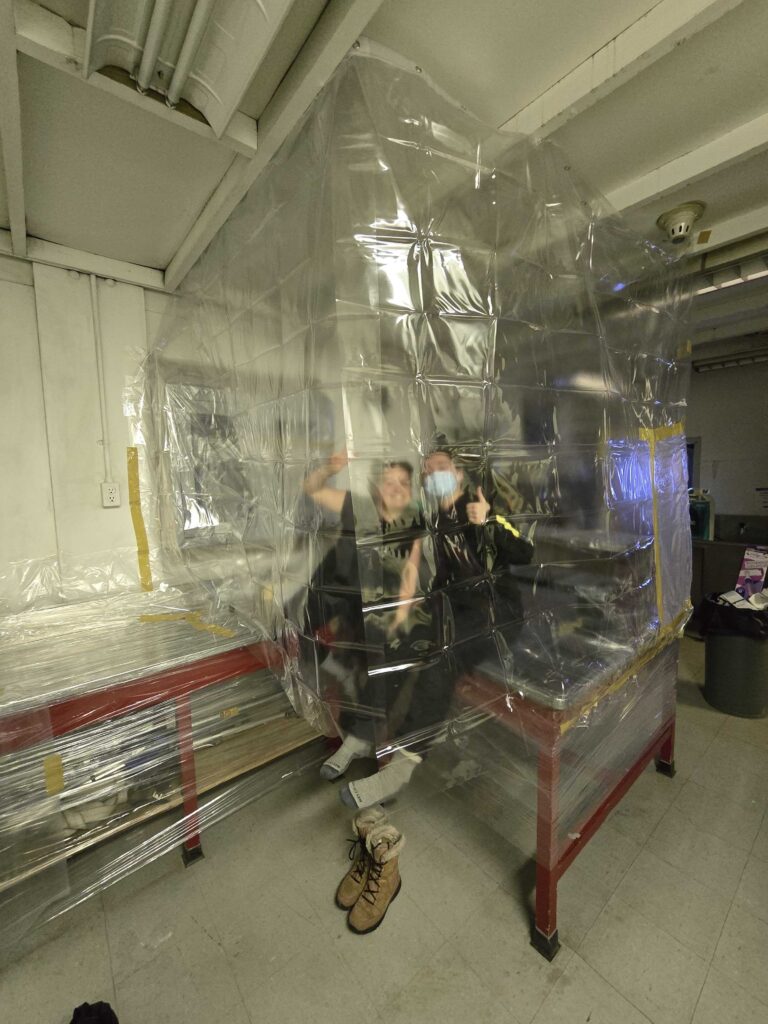
Before we tackle any science questions – we’ll discuss the season goals in an upcoming post – there’s first a lot of work to do in readying equipment. The first few days have been long, but extremely productive. Gear, everything from the winches and structures needed to deploy Icefin, to the sleds needed to tow equipment to the dive sites, to the sample processing equipment (including retrofitting a lab to be clean enough to process water samples) needed to be shipped up from New York, or else retrieved from where we’d stored it since last year; the first week is a lot of unpacking and inventorying.
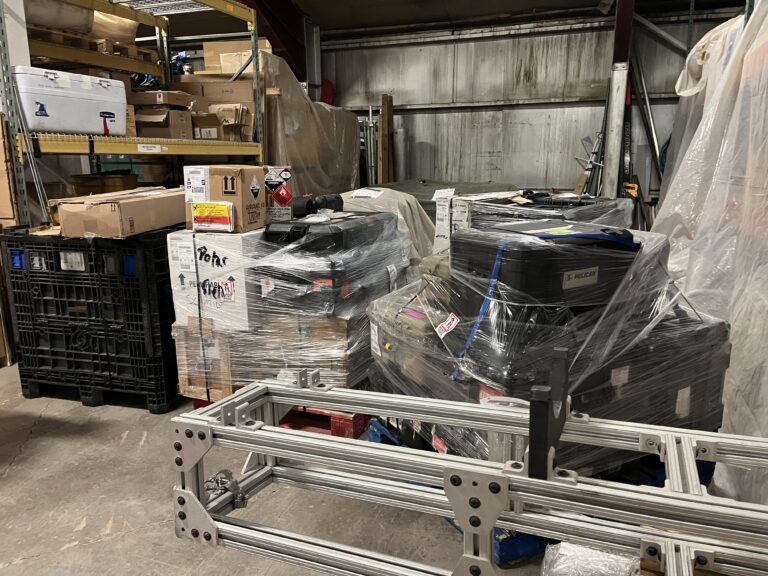
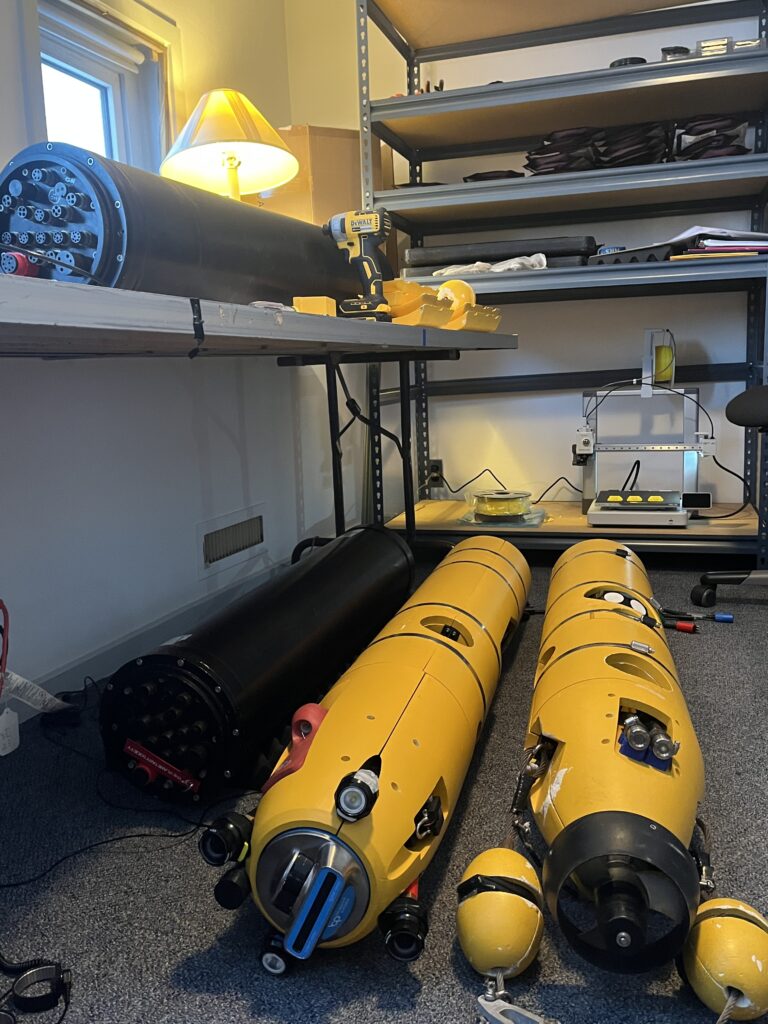
Some of the equipment we’ve shipped up for this year, including all of Icefin, sampling equipment and instruments, and Icefin’s deployment frame. Other equipment travelled with the team, or was stored since last season.
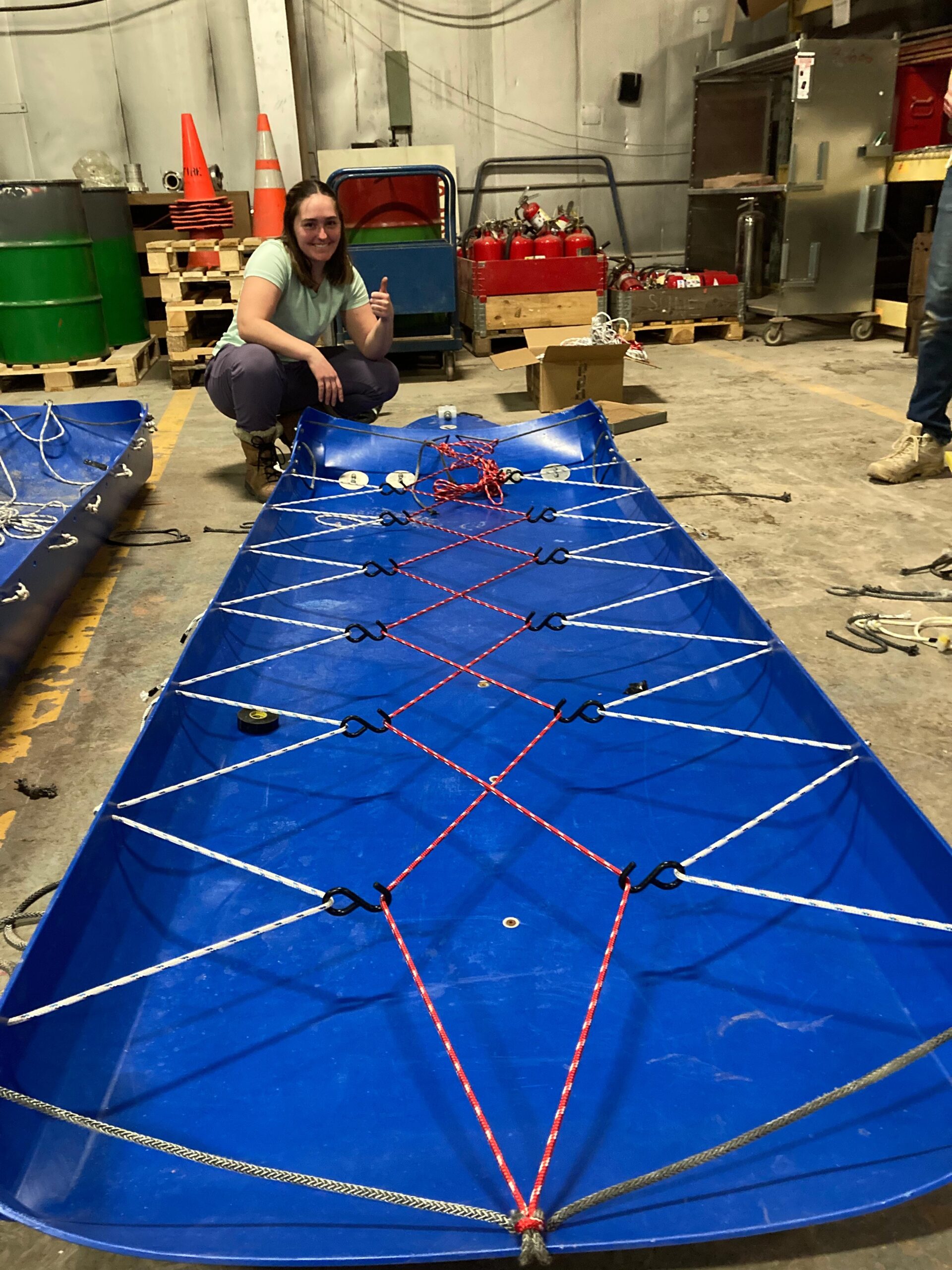
Veronica showing off some expert sled lacing – these sleds will hold all our gear as we drive out on the ice on snowmobiles for each dive or water sampling expedition.
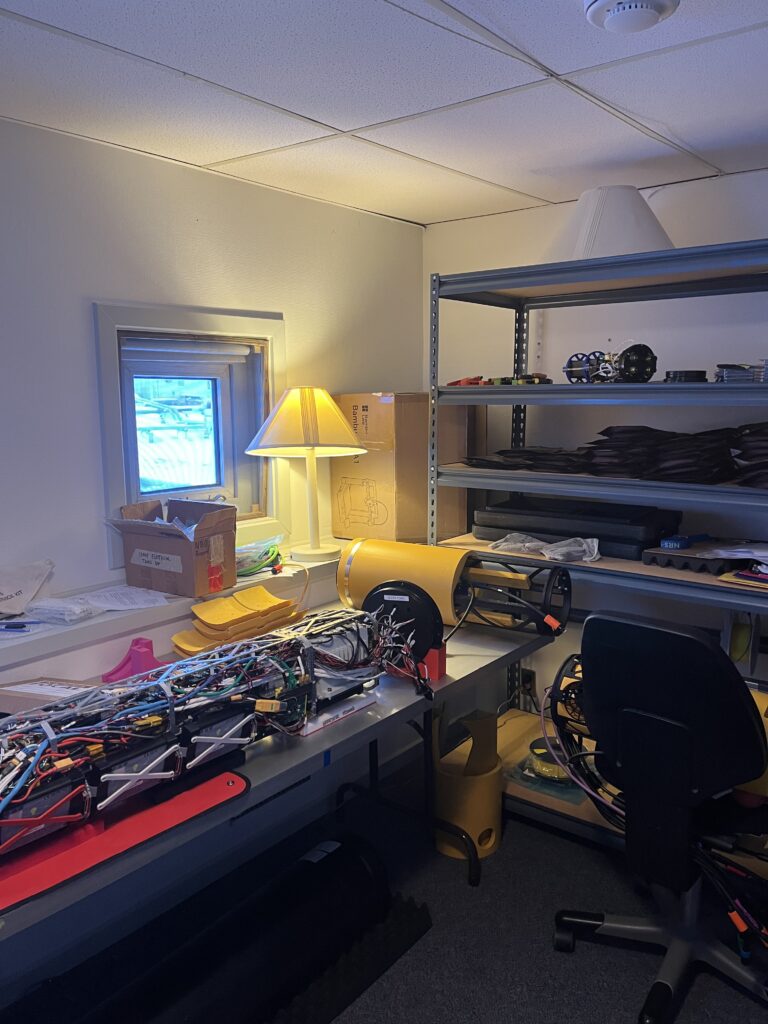
Very quickly, the robot pieces come out of the airline-friendly cases and are assembled and functionally tested. The electronics need to be assembled with batteries and checked that nothing has broken in transit.
Our makeshift engineering lab is set up in the National Science Foundation dormitory, and is where we prepare and test Icefin.
Dr. Brandi Revels and Veronica Hegelein presenting the retrofitting of the sample processing lab into a clean lab, so that samples taken from the fjord can be processed without contamination before being tested for microbes and metals.
Follow along on our adventures, both here and our social media channels!
This work would not be possible without the support of Polar Field Services and our hardworking mechanic Matt Anfinson; and the Greenlandic, Danish, and American staff here at Pituffik.
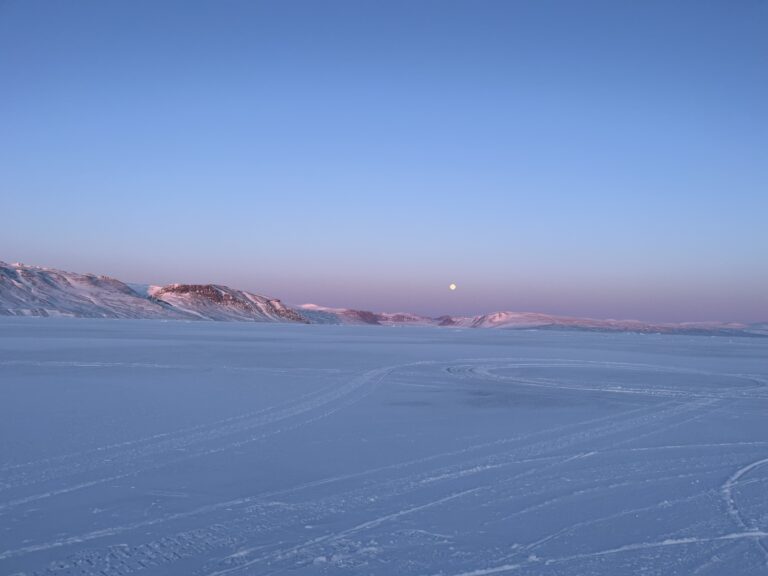
The incredble moonrise over a distant Rasmussen glacier from the ice.
We are reminded of both the privilege to be in this amazing place – sharing it with humans of many cultures and languages – and also the duty to do the most good and to share the best science we can do with the most people we can reach.