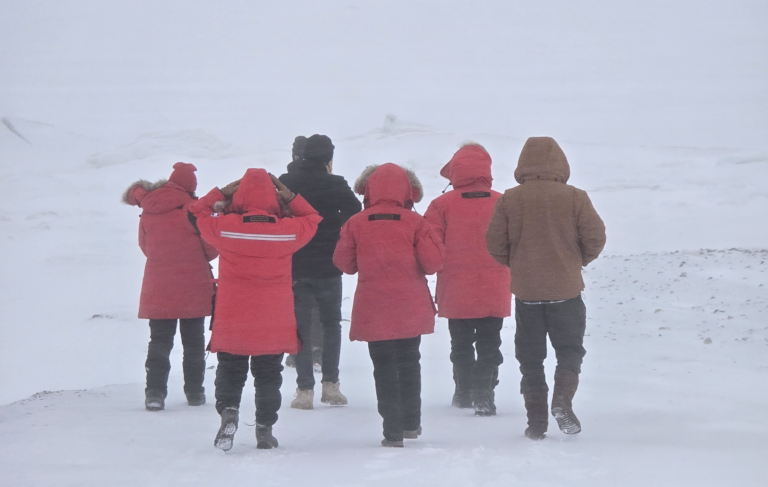
Have you ever had your flight delayed 24 hours? In polar work, it’s not uncommon. Despite this initial setback, the team has finally made it back to Pituffik Space Base in Greenland, ready to hit the ground running – but carefully (it’s icy!). We’ll be working here for the next eight weeks continuing our work on the SSHOW UP NASA PSTAR project, using our robot Icefin to explore the glaciers and subglacial channels of Wolstenholme Fjord, deploying long term moorings and monitoring instruments, and collecting water samples.
Before we tackle any science questions – we’ll discuss the season goals in an upcoming post – there’s first a lot of work to do in readying equipment. The first few days have been long, but extremely productive. Gear, everything from the winches and structures needed to deploy Icefin, to the sleds needed to tow equipment to the dive sites, to the sample processing equipment (including retrofitting a lab to be clean enough to process water samples) needed to be shipped up from New York, or else retrieved from where we’d stored it since last year; the first week is a lot of unpacking and inventorying.
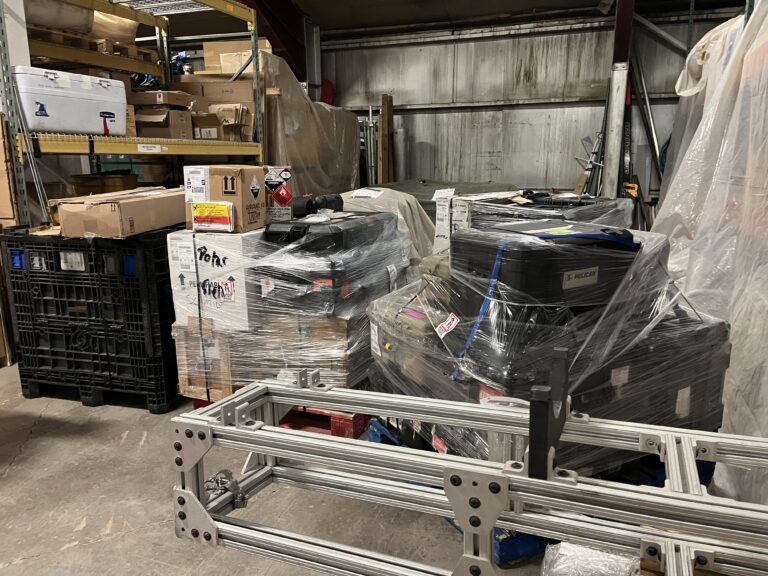
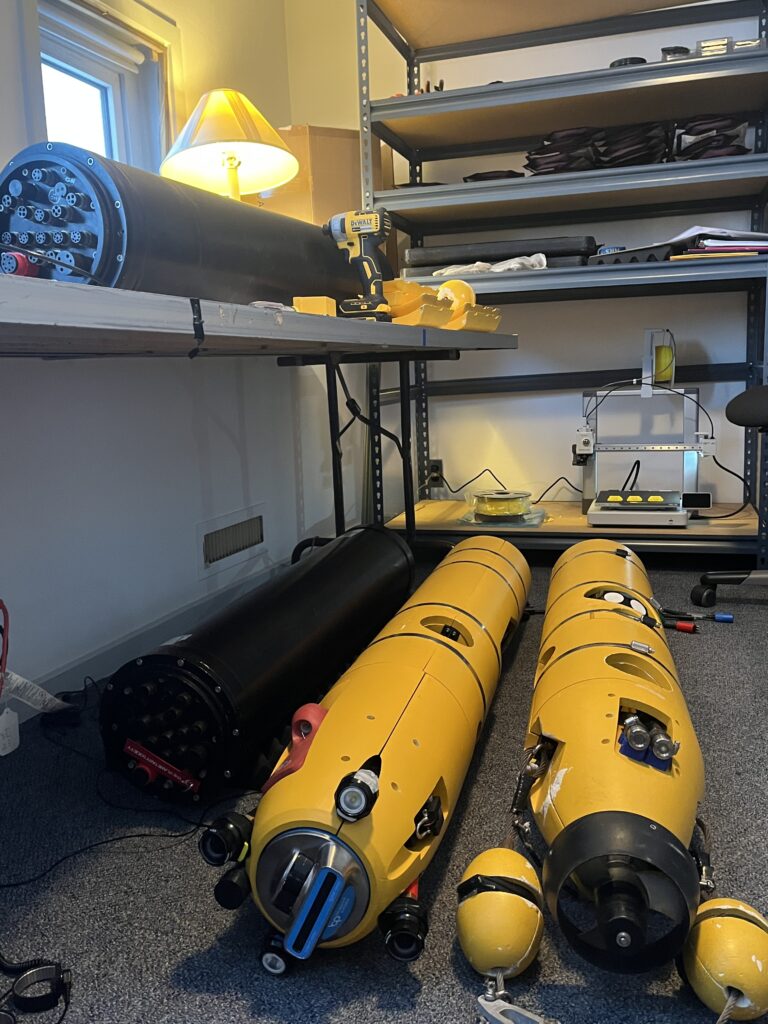
Some of the equipment we’ve shipped up for this year, including all of Icefin, sampling equipment and instruments, and Icefin’s deployment frame. Other equipment travelled with the team, or was stored since last season.
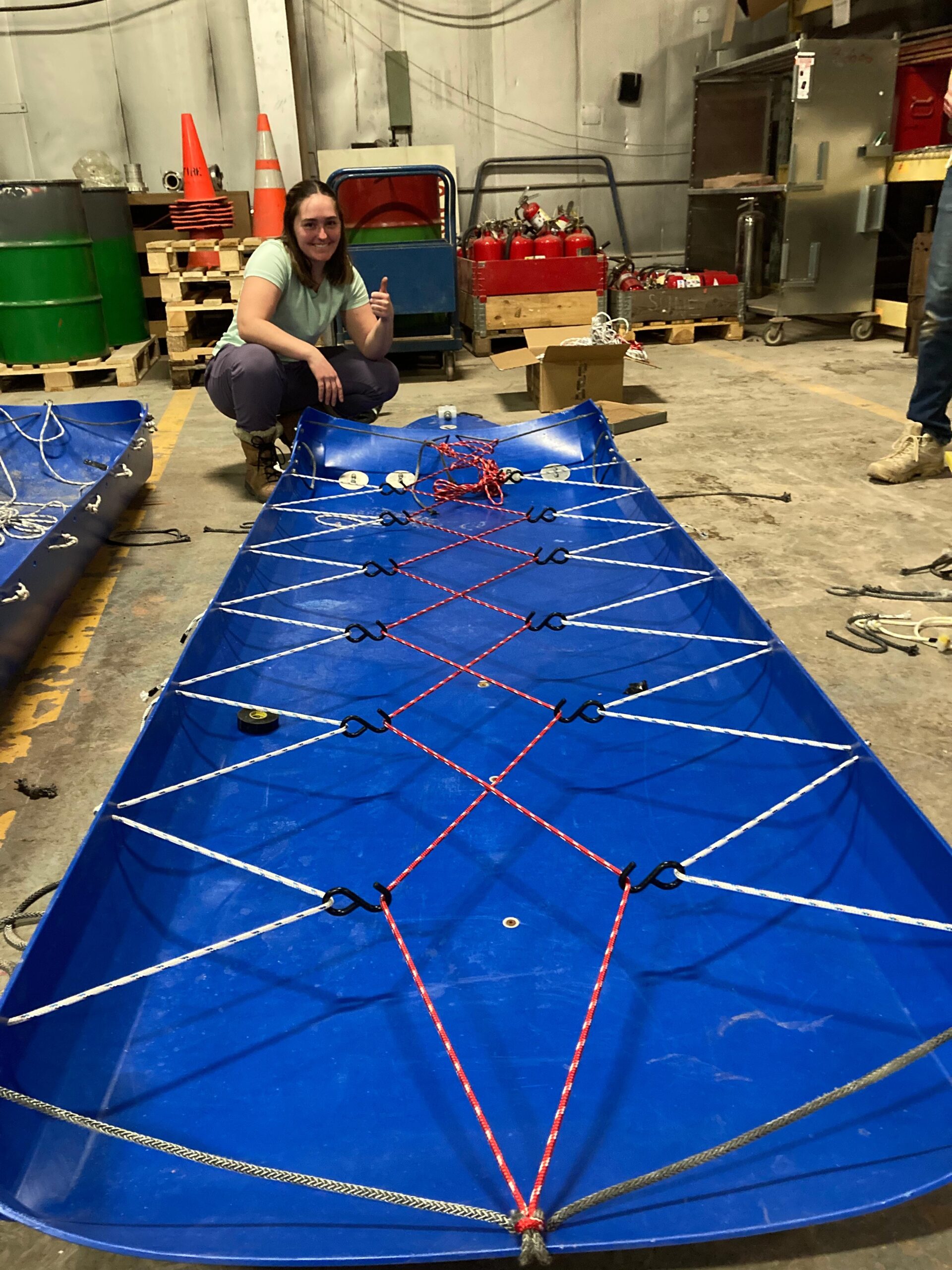
Veronica showing off some expert sled lacing – these sleds will hold all our gear as we drive out on the ice on snowmobiles for each dive or water sampling expedition.
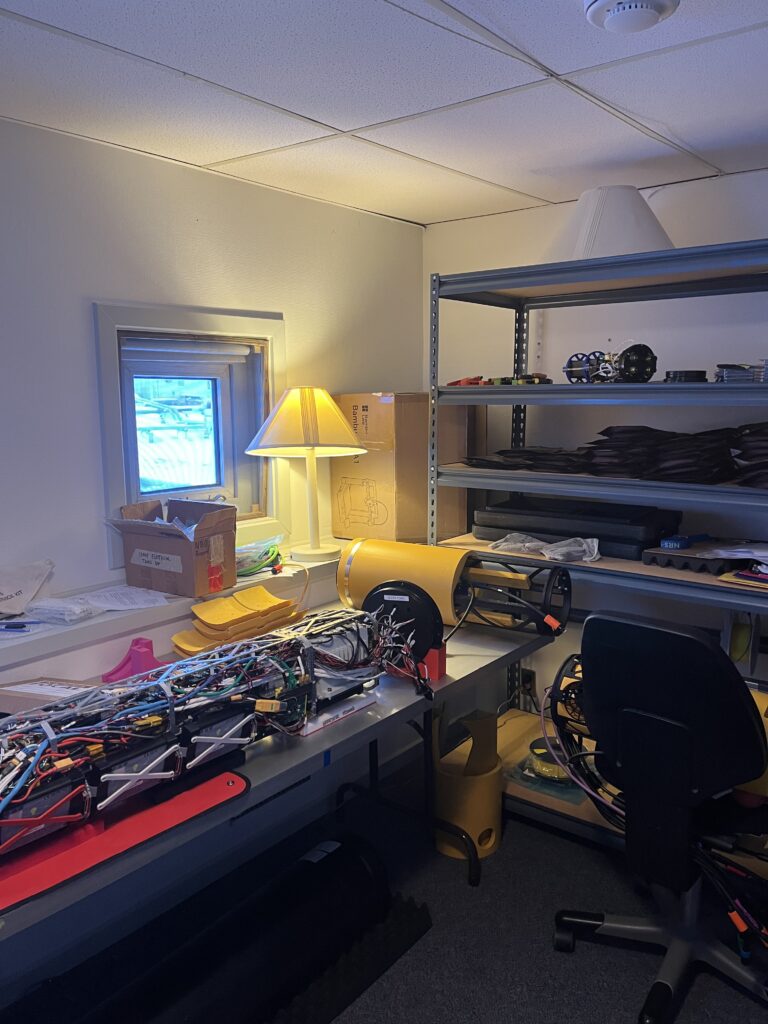
Very quickly, the robot pieces come out of the airline-friendly cases and are assembled and functionally tested. The electronics need to be assembled with batteries and checked that nothing has broken in transit.
Our makeshift engineering lab is set up in the National Science Foundation dormitory, and is where we prepare and test Icefin.
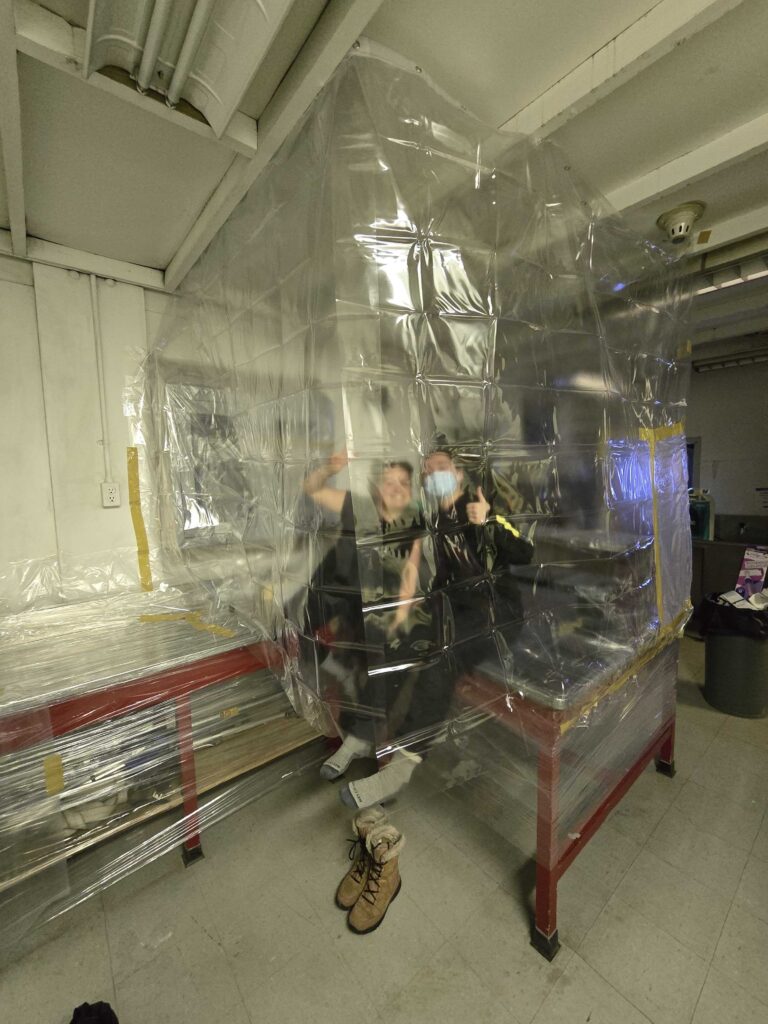
Dr. Brandi Revels and Veronica Hegelein presenting the retrofitting of the sample processing lab into a clean lab, so that samples taken from the fjord can be processed without contamination before being tested for microbes and metals.
Follow along on our adventures, both here and our social media channels!
This work would not be possible without the support of Polar Field Services and our hardworking mechanic Matt Anfinson; and the Greenlandic, Danish, and American staff here at Pituffik.
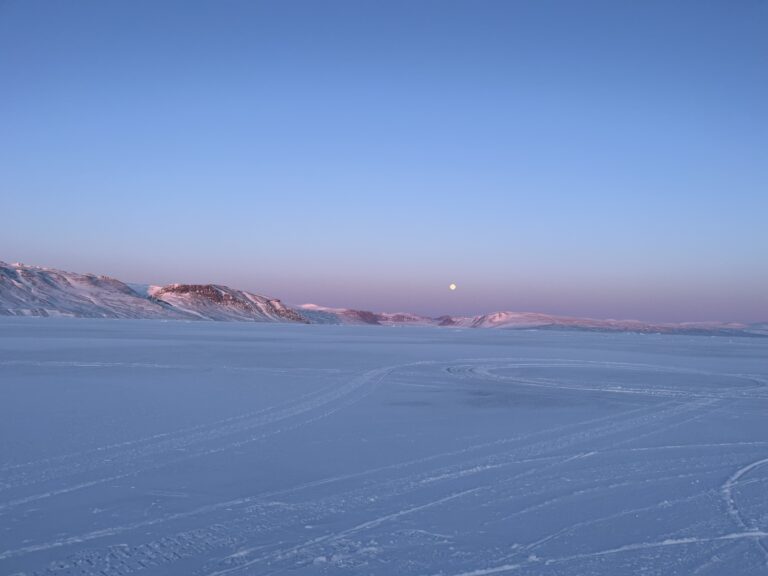
The incredble moonrise over a distant Rasmussen glacier from the ice.
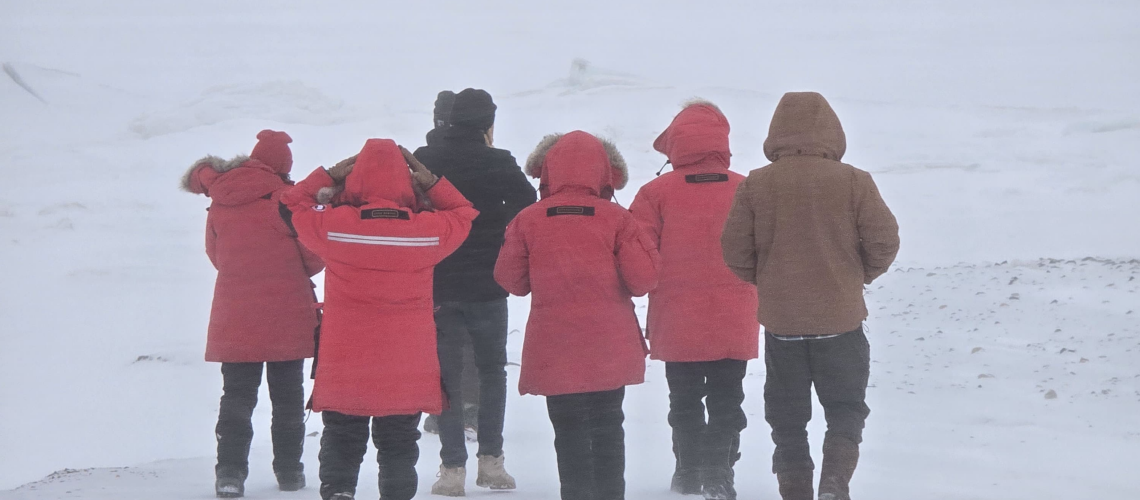
We are reminded of both the privilege to be in this amazing place – sharing it with humans of many cultures and languages – and also the duty to do the most good and to share the best science we can do with the most people we can reach.