Daniel Lein
Lead Electrical Engineer
MSECE
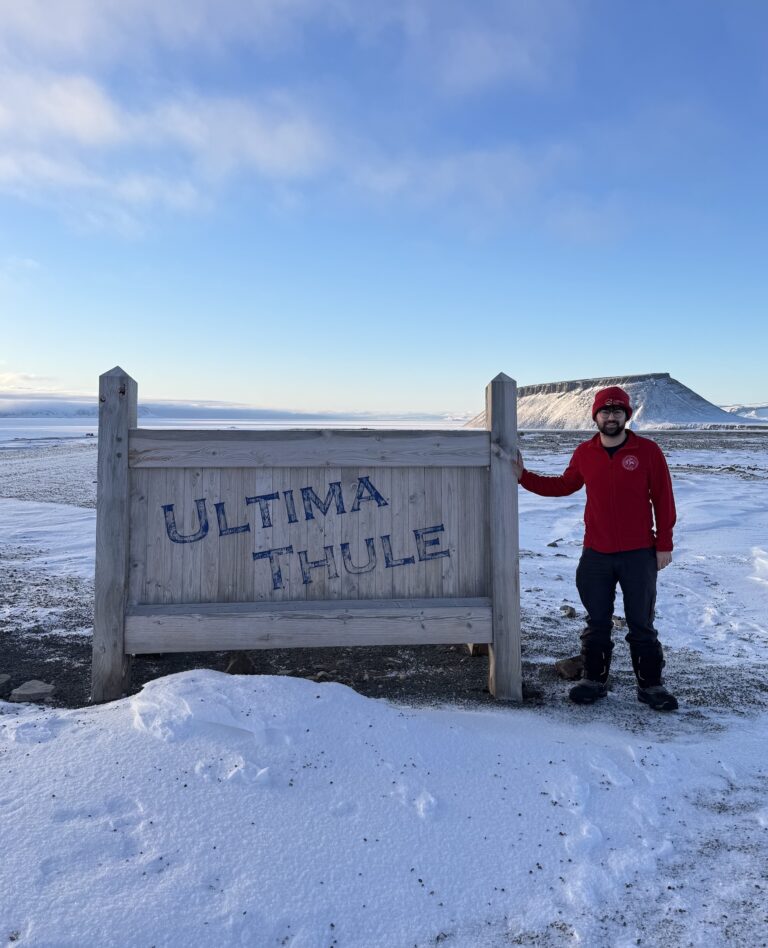
Daniel is the lead electrical engineer for ROV Icefin and a part-time PhD student at the lab. He develops power systems; control and communications electronics; and interface electronics for the vehicle’s scientific sensors, navigational instruments, and thrusters. Daniel is part of Icefin’s field team, traveling to field sites for Icefin’s deployments to gather data under ice. He has done work with Icefin in Antarctica (austral summer 2023-2024) as a part of the Norwegian Polar Institute’s TONe-FIO (Troll Observing Network-Fimbulissen Ice-shelf Observatory) expedition and in Greenland as part of the NASA SSHOWUP grant (winter 2025, winter 2026, planned winter 2027). He has also supported the NASA Pingo STARR grant as a member of the field team in Winter/Spring 2024, working in the Canadian Pingo National Landmark outside Tuktoyaktuk, Northwest Territories.
Daniel’s background is in electrical engineering, computer engineering, and physics. He graduated Dartmouth College with an A.B. in Engineering Physics and a B.E. in Electrical Engineering, and he received an M.S. in Electrical and Computer Engineering from the Whiting School of Engineering at Johns Hopkins University. His PhD research is in acoustic instrumentation; he is researching how sound waves travel through water and ice and how we may leverage acoustic communications technology to simultaneously collect scientific data. Before his work at the Planetary Habitability & Technology Lab, Daniel worked as a spacecraft electronics engineer at the Johns Hopkins University Applied Physics Lab, designing flight hardware and ground support electronics for several NASA missions, including Europa Clipper, Dragonfly, and DART (Double Asteroid Redirection Test).